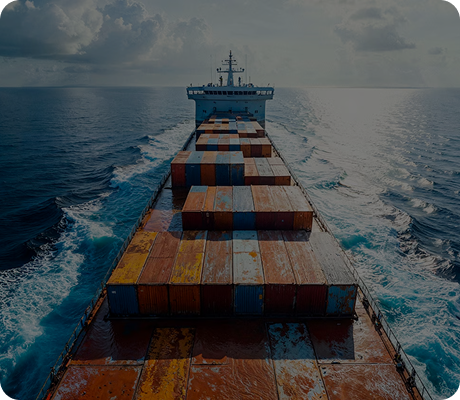
Container ships sail well below their top speed on purpose — a practice called “slow steaming” — because the fuel a ship burns rises roughly with the cube of its speed, so easing off a few knots saves an enormous amount of fuel. Carriers also use it as a lever to manage how much vessel capacity is in the water, which props up freight rates. For importers, the trade-off shows up as longer, more predictable transit times.
Key takeaways
- Slow steaming means deliberately running ships below their maximum service speed to cut fuel burn.
- Engine power — and fuel use per hour — scales with roughly the cube of speed, so even a modest speed cut yields outsized fuel savings over a voyage.
- Slowing the whole fleet absorbs vessel capacity: more ships are needed to maintain the same weekly service, which soaks up overcapacity and supports freight rates.
- It also cuts emissions, aligning with IMO decarbonization pressure.
- For importers, the cost is longer transit times — which makes planning around your ETA, not your sail date, essential.
What is slow steaming?
Slow steaming is the practice of operating a vessel at a speed meaningfully below its design or “full” service speed. A large container ship might be capable of 22–24 knots but cruise at 16–18 — or even slower in “super slow steaming.” It became widespread after the 2008 fuel-price spike and the capacity glut that followed, and it never really went away because the underlying economics are too good to ignore.
The fuel math: why a small speed cut saves so much
The reason comes down to fluid dynamics. The power a ship needs to push through the water rises steeply with speed — the propulsion power required is roughly proportional to the cube of velocity. Because the engine burns fuel in proportion to the power it produces, fuel consumption per hour climbs just as steeply.
Play that out over a fixed route. If a ship slows down, each mile takes a bit longer, but the fuel burned per mile drops sharply. The net effect across the whole voyage is that a roughly 10% reduction in speed can cut fuel consumption for that leg by around 20%. Multiply that by a vessel burning tens of thousands of dollars of fuel a day, across an entire fleet, across a year, and the savings run into the billions industry-wide. That is the “counterintuitive” part: going slower makes more money.
Capacity management: the hidden lever on freight rates
Fuel savings are only half the story. Speed is also a supply dial. A shipping line runs strings — weekly services where a vessel leaves port every seven days. If the ships on that string sail slower, each round trip takes longer, so the line needs more vessels to keep departures weekly. That quietly removes idle capacity from the global pool.
When the market is oversupplied with ships, that excess capacity pushes freight rates down. By slow steaming, carriers absorb their own surplus tonnage, tightening effective supply and helping to firm up rates. It is a rational, fleet-wide response to overcapacity — and it is one reason spot rates can hold up even when demand looks soft.
The environmental angle
Burning less fuel also means emitting less carbon, sulphur, and other pollutants. With the IMO tightening decarbonization targets and carbon-intensity rules on shipping, slow steaming doubles as a compliance tool: it is one of the fastest, cheapest ways for a carrier to lower a vessel’s emissions profile without new technology.
What slow steaming means for importers
If you import by ocean, slow steaming is part of why your cargo spends as long as it does at sea — and why “the ship left, so it should be here soon” is the wrong mental model. A few practical implications:
- Plan around the ETA, not the sail date. Transit times are built around slower service speeds, so when you request an ocean freight quote, plan to a realistic transit window — what matters is when cargo arrives, not when it departs.
- Build buffer into inventory. Longer, steadier transit means you should order earlier and keep a little more safety stock, rather than expecting express delivery from ocean freight.
- Understand why premium services cost more. Faster, guaranteed-space, or expedited services exist precisely because they break from the slow-steaming norm — and you pay for the fuel and capacity that speed consumes.
- Expect rates and transit to move together. When carriers manage capacity through speed (and blank sailings), both your transit time and your rate can shift — which is why it pays to calculate your true landed cost rather than chase the cheapest rate.
Frequently asked questions
What is slow steaming in shipping?
Slow steaming is the deliberate practice of operating a ship below its maximum service speed to reduce fuel consumption. A container ship capable of 22–24 knots might cruise at 16–18 knots, sacrificing speed for large fuel savings.
Why does sailing slower save so much fuel?
The power needed to move a ship through water rises with roughly the cube of its speed, and fuel burn tracks power. So a small reduction in speed produces a disproportionately large drop in fuel use — a roughly 10% slower speed can cut fuel for a voyage by around 20%.
How does slow steaming affect freight rates?
Running ships slower means more vessels are needed to maintain the same weekly service, which absorbs surplus capacity from the global fleet. Tighter effective supply helps support — or firm up — freight rates, especially when the market is oversupplied.
Does slow steaming delay my cargo?
Yes. Slower service speeds lengthen ocean transit times. The delay is predictable and built into published schedules, so the key is to plan around your estimated arrival date and carry appropriate buffer stock.
Is slow steaming good for the environment?
Burning less fuel lowers CO2 and other emissions, so slow steaming is also used to meet tightening IMO carbon-intensity rules. It is one of the cheapest ways for carriers to reduce a vessel’s emissions without new technology.
Related reading
- How Fast Do Cargo Ships Go?
- How to Get an Ocean Freight Quote in 5 Simple Steps
- How to Calculate True Landed Cost in 2026
- The Complete Guide to Ocean Freight Shipping
- Freight Forwarding Services Explained for Growing Brands
This article is for general educational information. Transit times, vessel speeds, and freight rates vary by carrier, trade lane, and season. Contact Simple Forwarding to plan your ocean shipments around realistic schedules.